Less Is More
Learn about some of the reinforcement learning techniques that can help robots cope with partial observability, such as hidden state models, belief state models, and more.
Divided Attention in Human
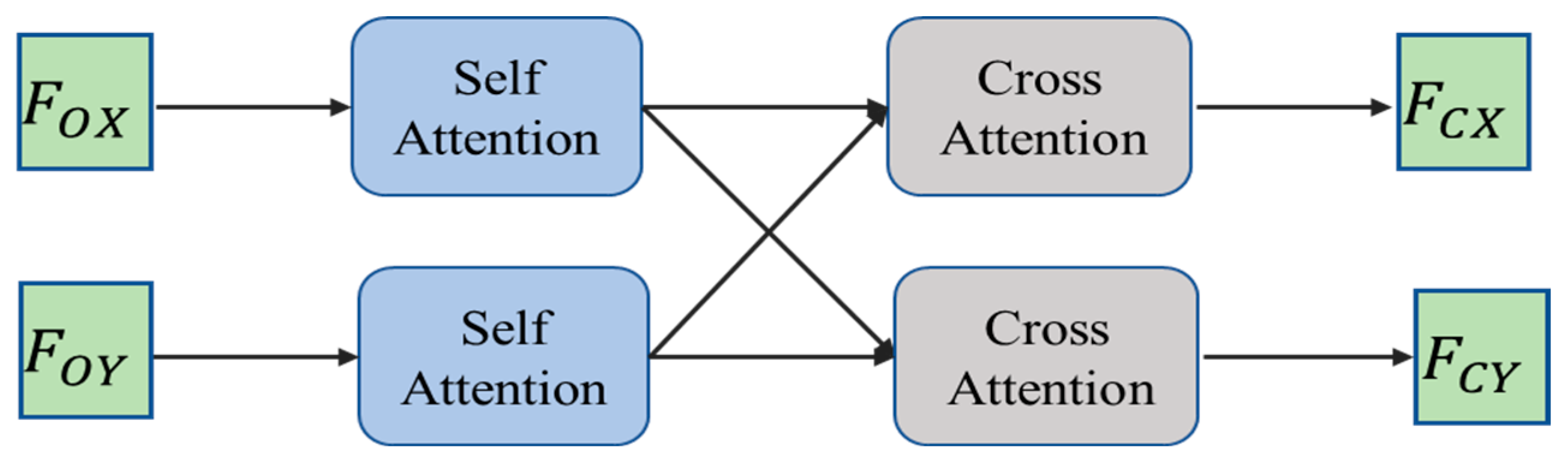
This paper explores division of attention for people in human-robot teaming within immersive virtual environments (IVEs), focusing on search tasks where a supervisor oversees multiple robots distributed across various locations. We examine how spatial separation of...
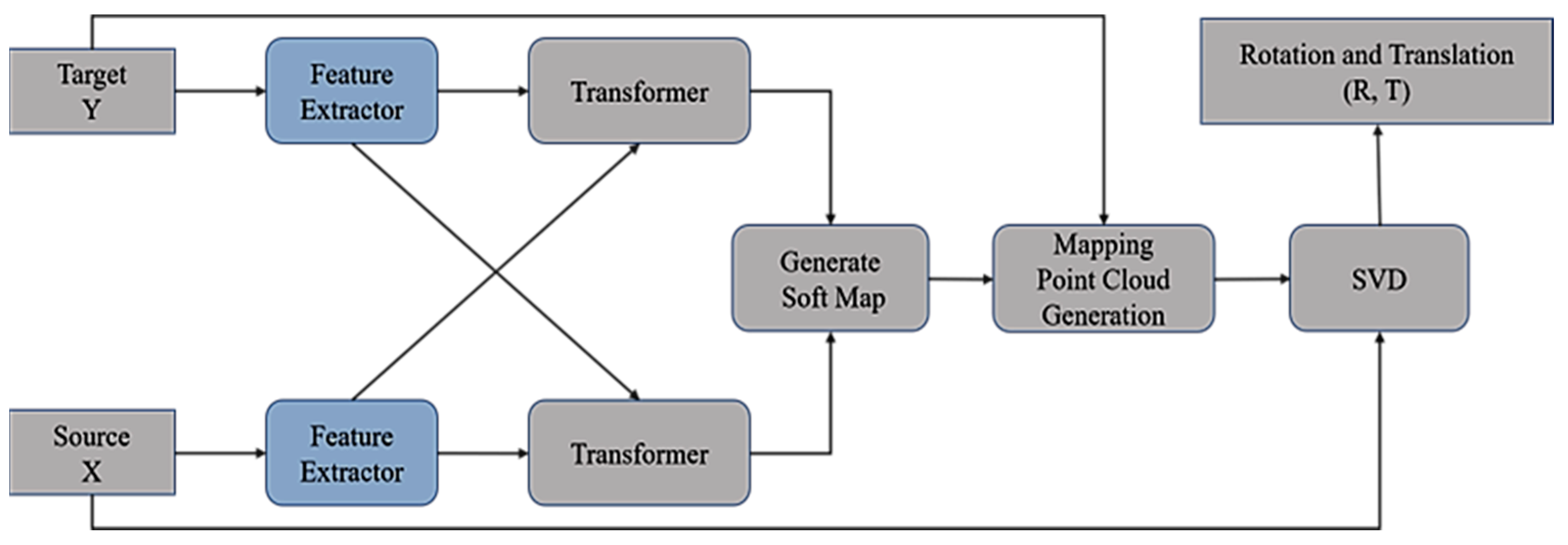
The actions of both humans and robots dynamically modify the state of the environment in real-time, leading to non-smooth characteristics of the overall environment. As a result, the human-robot collaborative environment exhibits the dual features of partial observability and non-smoothness.

Moving forward, it's essential to keep these visual contexts in mind when discussing Using Partial Attention In Robotics.
Less Is More
Experiments on an illustrative decentralized control task and a mobile manipulation task with a real robot show that multiple agents with access to partial observations outperform a single agent when parts of the system fail. Index Terms—Robot learning; Robust learning; Multi-agent reinforcement learning; Dec-POMDP; Mobile manipulation.
Model-based reinforcement learning for robot control offers the advantages of overcoming concerns on data collection and iterative processes for policy improvement in model-free methods. However ...
The system is capable of handling significant viewpoint differences between the user and the robot and adapts easily to new objects. In tests under partial occlusion conditions, the Siamese networks demonstrated an 85.2% accuracy in aligning the user-selected object with the robot's viewpoint.

Furthermore, visual representations like the one above help us fully grasp the concept of Using Partial Attention In Robotics.
The ability to recognize novel objects with a few visual samples is critical in the robotic applications. Existing methods mainly concern the recognition of inter-category objects, however, the object recognition from different sub-classes within the same category remains challenging due to their similar appearances. In this paper, we propose a key-part attention retrieval solution to ...
PDF Human Orientation Estimation Under Partial Observation
As a result, algorithms developed by these datasets often struggle when confronted with partial observations, which are common in wheeled robots or robot dogs equipped with cameras. MEBOW [8] creates in -the-wild datasets and trains orientation estimation models concurrently with human joint detection.
Additional Notes on Using Partial Attention In Robotics
(PDF) Meta-reasoning Using Attention Maps and Its Applications in Cloud. This note connects the source idea with the visuals in a simple, reader-friendly way.
(PDF) Stability of an Underactuated Passive Biped Robot Using Partial. It works as a short bridge between the article summary and the gallery section.
Machine Vision System In Robotics Pdf at Jonathan Whelchel blog. The extra context helps the page feel more useful without forcing the same phrase repeatedly.